Helen TranHT
WorkAbout MeLinkedinEmail

Partial shipments

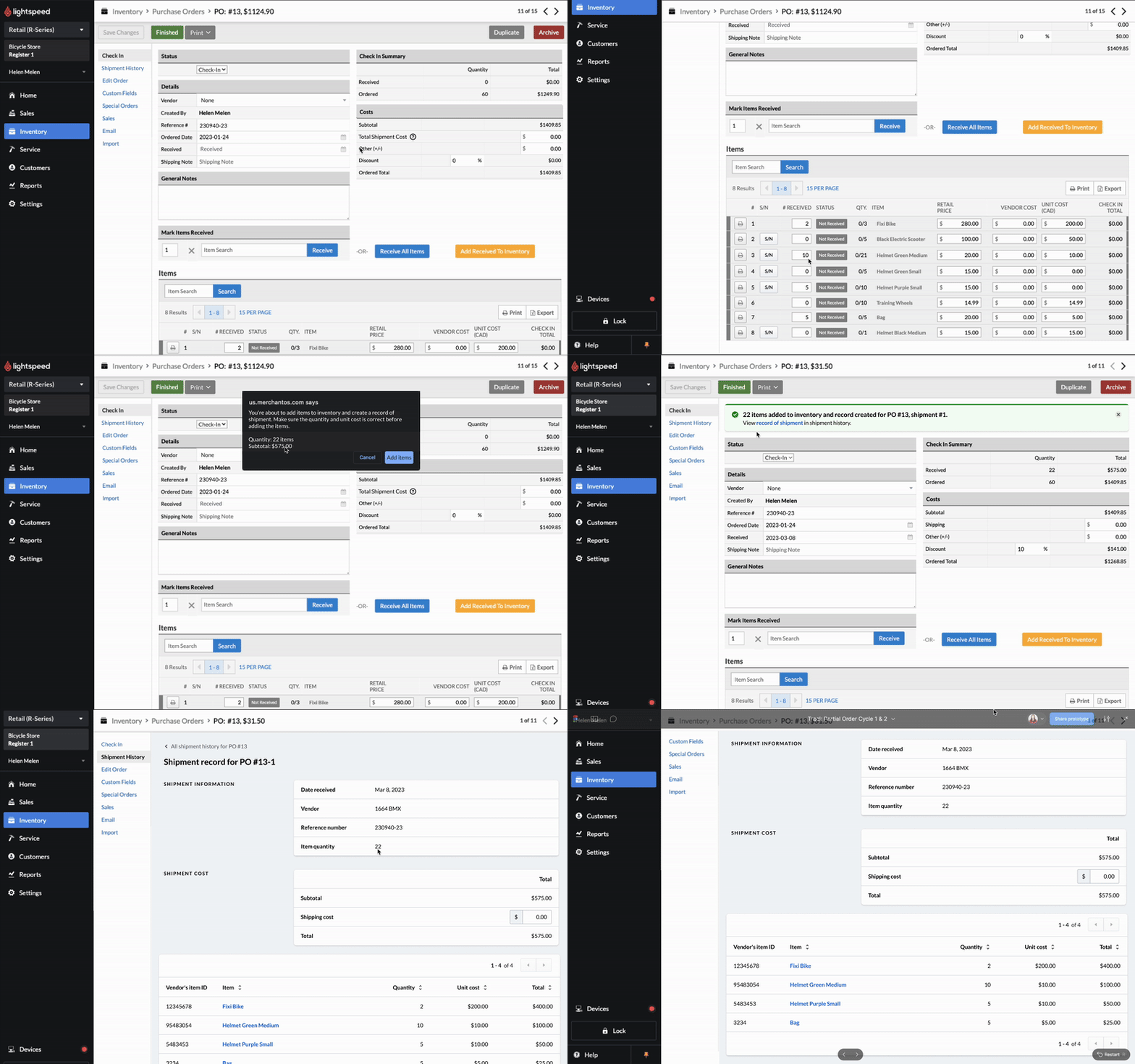
This project was part of an initiative at Lightspeed for the R-Series POS to help merchants manage their shipments arriving from their supplier. Once merchants place an order to their supplier, their shipments would arrive in batches.
Company
Lightspeed
Tools
Miro
Figma
My Role
UI Designer
UX Designer
Researcher
Gross payment volume

$25M

Adoption Rate

55,000

Another Stat

$25M

OVerview

This project was part of an initiative at Lightspeed for the R-Series POS to help merchants manage their shipments arriving from their supplier. Once merchants place an order to their supplier, their shipments would arrive in batches. R-Series is known for their robust inventory management features that is top of the line in the industry.

To maintain this status, we wanted to help merchants manage their shipments within their purchase order. The reality is the merchants are receiving their orders in batches of shipments and the system was not adapted to their reality.

Insights From interviews

This project was initially owned by another product manager and product designer, the project got cancelled. When I joined the team, we’ve picked it up and we rewatch all the recorded interviews that was done. The previous product manager interviewed 9 merchants and the main insights we got from these merchant is

Batch Ordering Receiving

They are receiving their orders in batches of shipment

Multi-Shipment Orders with Individual Invoices

One order from their supplier can contain many shipments and each of these shipments have their own invoices

Lack of Shipment Quantity Visibility

Merchants do not have visibility on the quantities and cost of items per shipment batch, so they can't compare the quantities on hand against the quantities of items on the invoice to see if there's any discrepancies

Error-Prone Manual Workarounds

Merchants have created workarounds to document their orders received but they are prone to human error

Current User Journey

Work around User journey

Problems

Suppliers are sending an invoice for each shipment batch within a PO and merchants are not able to track what has been received per shipment and match a record to the supplier's invoice. So if there's an error in quantities or cost, the merchant will be paying an incorrect amount.

Opportunity

How might we create a record for each shipment in a purchase order, so that the merchants can compare their records with the supplier’s invoice to see if there are any discrepancies and pay the supplier the correct amount.

User Testing

We wanted to test the functionality therefore we decided to build a prototype with the intention of:

01.

Getting merchant’s first impression on the feature

02.

Discoverability of the new feature within their workflow

03.

Merchant’s interpretation of the information

Insights from user testing

Shipment Reference Number Tracking

Suppliers are using shipment reference numbers to identify shipments sent to merchants and merchants are identifying their shipments

Accounting's Need for Shipment Overview

Reality is that accounting needed an overview of all shipments in order to pay for the invoices and shouldn't navigate within each purchase orders to see each shipments

Invoice Due Date Management

Supplier will send invoices with due date and merchants would need an area to input that due in order to pay their suppliers on time

Release

We ended up releasing the feature to track partial shipment and based on the feedback. We ended up prioritizing the adding shipment reference number to identify the shipment since this will help our merchants identify their physical shipments to what is on the system. Based on the two other feedbacks - we realize it would be a poor experience for accountings to go within each PO to find invoices but it will still be an impactful release because they can now have the information of their shipments to compare with the invoices.

Helen Tran

Montreal, Quebec Canada